Blog Nutrition
Why calorie counting apps frustrate you (and what structure fixes)
Fat loss comes down to energy balance, and tracking is how you make that balance visible. The law of thermodynamics is harsh but simple: as long as less energy enters your body than it expends, it will be forced to use its own reserves, meaning fat.
Once they realize this, most people turn to calorie-tracking apps. However, that is exactly where a major problem arises.
The apps themselves aren't bad; they are just tools. But to use that tool effectively, you must first have serious foundational knowledge about nutrition and the ingredients themselves. It's not enough to simply say, "I track calories, so I'm good."
The story is much more complex than a mere number on a screen. Besides total calories, there is the tracking of macronutrients (proteins, carbohydrates, and fats), their specific ratios, micronutrients, and finally, the overall context of the diet. Calories decide whether you lose or gain. But 1700 calories with enough protein and fibre can help you feel fuller, while enough protein can help preserve muscle during weight loss. A marathon runner and a bodybuilder on a cut will not have nearly the same nutritional needs, even if they share the exact same 1700-calorie target.
Nutritional "Tetris" and decision fatigue
This is a problem most beginners face. I know this from personal experience when I was starting out, as well as from working with clients.
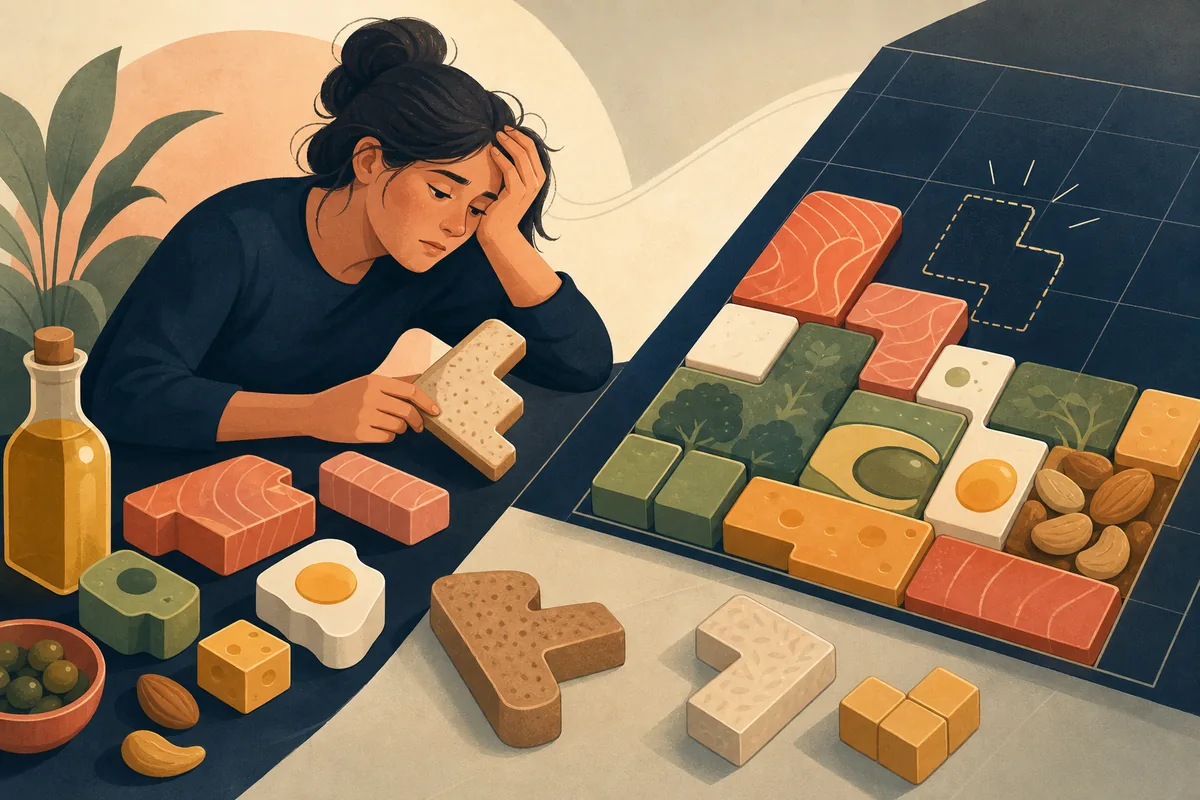
They start logging food into the app, and the following happens: they reach the end of the day, hit their protein goal, fill up their fats, but they still have 50 grams of carbs left to consume. What now? The panicked search begins for a food that has exactly 200 calories, exclusively carbohydrates, zero protein, and zero fat, just so they don't blow past their other macro limits.
Playing this "nutritional Tetris" day in and day out can be extremely exhausting. Science calls this decision fatigue. When you have to make ten different decisions every day about what to eat just to make your macros fit, your willpower drops, stress kicks in, and sooner or later you give up. But that is not even the biggest mistake people make with apps.
The invisible mistake: the trap of cooking and weighing
Where most people completely miss their caloric deficit is during food preparation. You can weigh food raw or cooked. What matters is that the entry in the app matches what is on the scale, and that you do it the same way every time. I use raw weights, because cooked weights change with how long and how you cook.
Why? Because ingredients drastically change their weight and volume due to boiling or baking (either losing or absorbing water), while their core caloric value remains exactly the same.
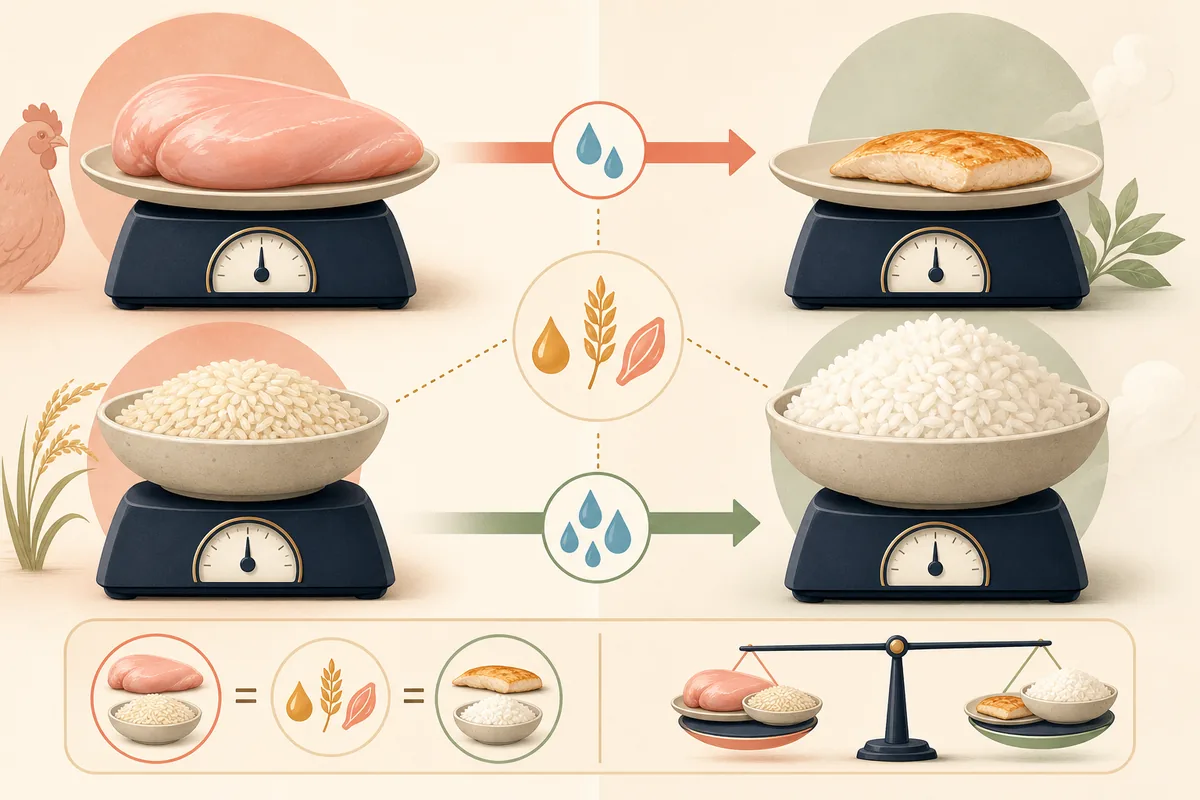
When you cook meat, it loses water and shrinks. Roughly speaking, meat loses around 25% to 30% of its weight during cooking, depending on the cut and the method.
If you weigh 200g of raw chicken breast, that is about 220 calories and 46g of protein. Once you cook it, it will weigh around 140g to 150g. But if you put 200g of already cooked meat on the scale (because that's what you blindly selected in the app), you are actually eating close to 280g of raw meat, almost 100 calories more in just one meal, without even realizing it.
The exact same principle applies to carbohydrates, just in the opposite direction:
- Rice: Absorbs a massive amount of water. 100g of raw rice (about 350 calories) weighs nearly 300g after cooking. If you weigh out 100g of cooked rice, you've consumed barely 115 calories, thinking you ate a full portion, and you will be left hungry.
- Pasta: Similar to rice, 100g of raw pasta (about 360 calories) absorbs water and becomes about 220g to 250g of cooked pasta.
- Sweet potato: If you bake it in the oven, it loses water. 200g of raw sweet potato (about 170 calories) will turn into about 150g baked.
- Oats: 50g of raw rolled oats is 190 calories, but when they absorb water or milk, they turn into a heavy bowl of porridge weighing over 150g.
- Ground beef: Besides water, it also loses fat as it melts off in the pan. 200g of raw beef loses roughly 25–30% of its mass during browning.
These are all "little details" that invisibly add or subtract hundreds of calories daily, completely erasing your deficit and leaving you wondering why the scale won't budge.
Why structure is the key to success
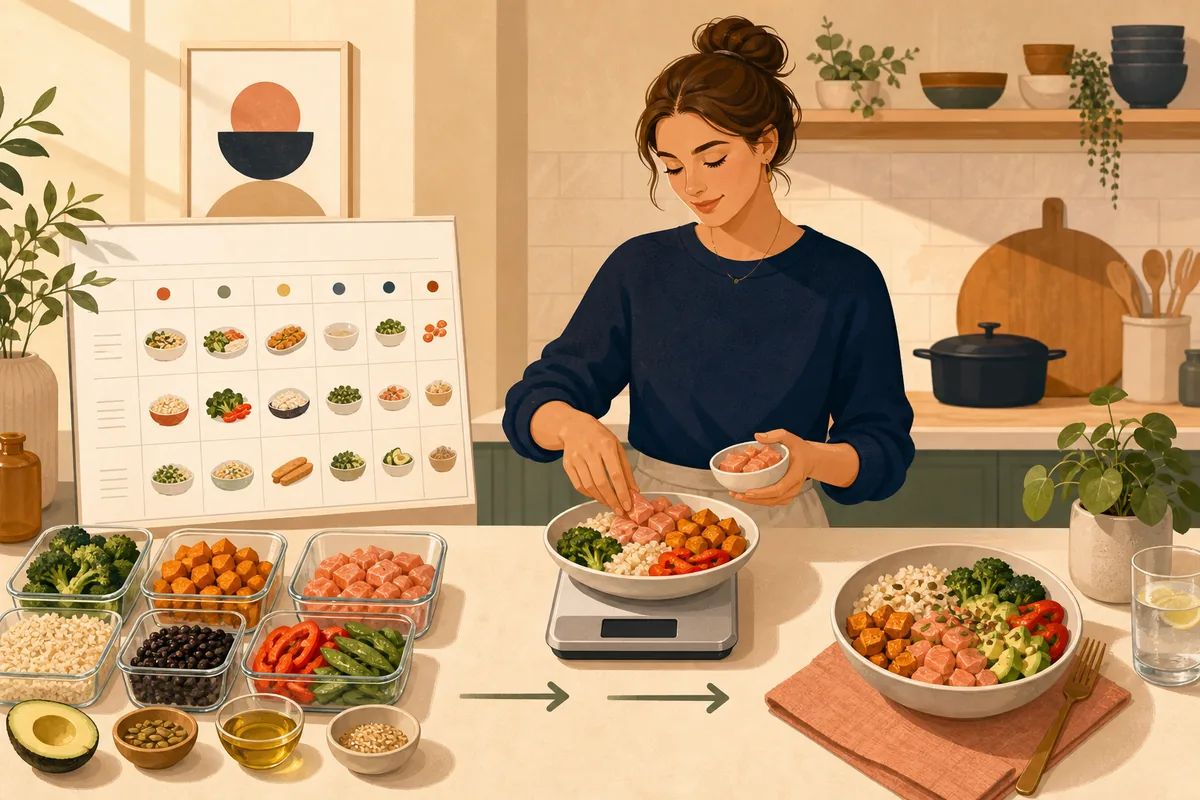
This is why I advocate for an approach where you get everything upfront. No guesswork, no playing macro Tetris before bed, and no mistakes with cooked versus raw foods.
When you work within a structured system, you receive a complete meal plan with exact food measurements in grams, calculated strictly in their raw state. Your only job is to follow that list and stop overthinking your food, leaving the math to someone who truly understands human physiology. With a plan like this, sticking to it gets easier, and when the scale doesn't move, we can see why and adjust.
Tired of playing macro Tetris?
My clients get a complete plan with exact grams: raw weights, foods they actually like, rotated every week. No apps to fight with.
This article is general information, not medical advice. If you have a health condition, are pregnant, or take medication, talk to your doctor before changing how you train or eat. See the Health Disclaimer.