Blog Nutrition & science
Insulin: what it actually does (and what it doesn't)
Insulin is far more than just a "blood sugar hormone". Insulin helps regulate how glucose is taken up and stored in muscle, liver and fat tissue. It does not decide on its own whether you gain muscle or fat. Over weeks and months, that comes down to total calories, protein and training.
Understanding how insulin works, how to optimize it, and how to avoid disrupting it is one of the most high-leverage things any fitness enthusiast can do. Whether you are chasing muscle, leanness, or peak athletic performance, insulin is at the center of every conversation.
What is insulin and where does it come from?
Insulin is a peptide hormone secreted by the beta (β) cells of the pancreas in direct response to rising blood glucose levels. Once produced, it enters the bloodstream through a process called exocytosis. Essentially, the β-cells package insulin into secretory vesicles and release it into systemic circulation. From there, it travels to target tissues, where it binds to specific receptors on the cell membranes of muscle and adipose tissue and triggers a cascade of downstream metabolic events. Insulin belongs to a subfamily of receptor tyrosine kinases, functioning through a second messenger system that affects everything from glucose transport to gene expression and cell growth.
Of all three macronutrients, carbohydrates trigger the greatest secretion of insulin, followed by protein, while dietary fats activate it the least. This hierarchy matters enormously when designing a nutrition strategy around training. It also explains why carbohydrate timing, rather than carbohydrate elimination, is the smarter approach for body composition. One additional detail worth knowing: insulin has a half-life of only 4 to 6 minutes in circulation, meaning its effects are rapid, precise, and tightly regulated. The body is not sloppy with this hormone, and neither should you be.
Insulin's core job: managing blood glucose
The job most people associate with insulin is blood glucose regulation, and for good reason. It is insulin's most immediate and critical function. When blood glucose rises after eating, insulin is released and stimulates muscle and adipose tissue to absorb glucose by triggering GLUT4 transporters to migrate from their storage vesicles to the surface of the cell membrane. Think of GLUT4 as a gate, and insulin as the key that opens it. Without insulin's signal, GLUT4 stays locked away and glucose has nowhere to go.
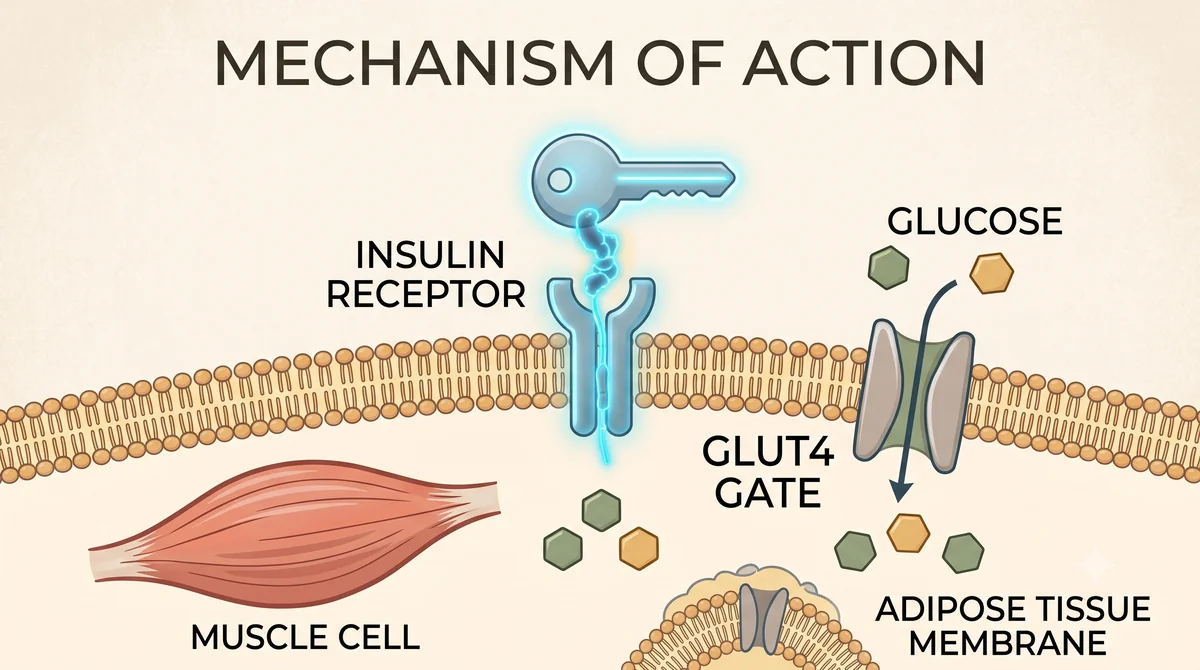
At the same time, insulin inhibits gluconeogenesis, the liver's process of manufacturing new glucose, and promotes glycogen synthesis in both the liver and skeletal muscle. This dual action prevents dangerous elevations in blood glucose, a condition known as hyperglycemia. Blood glucose levels are maintained within a remarkably narrow range through the balance between glucose absorbed from the intestine, glucose produced by the liver, and glucose taken up by peripheral tissues, with insulin acting as the central regulator of this entire system.
When insulin fails to function properly, as in type 1 diabetes, GLUT4 is unable to transport glucose into muscle and adipose cells, and blood glucose rises to chronically dangerous levels. This makes the importance of insulin function impossible to overstate. A body that manages insulin well is a body that manages energy well.
Insulin as a powerful anabolic hormone
Here is where things get exciting for anyone training seriously. Insulin is not just a glucose manager. It is described in the scientific literature as the most anabolic hormone in the body. Its anabolic reach covers all three macronutrient storage pathways: it promotes glycogen synthesis, lipid synthesis, and protein synthesis, while simultaneously inhibiting the breakdown, or catabolism, of all three. In other words, when insulin is present and your cells are sensitive to it, your body is in a state of building and storing.
On the fat storage side, insulin stimulates fatty acid synthesis using excess glucose and fructose as precursors. Newly synthesized triacylglycerols are packaged into VLDL particles and shipped to adipose tissue for storage, and insulin simultaneously inhibits lipolysis, the breakdown of stored fat, in adipose tissue. But don't let that scare you. Insulin rises and falls every time you eat; that is normal. Fat is gained over time when you eat more energy than you use, whatever your insulin does from meal to meal.
For the fitness enthusiast focused on muscle and performance, insulin's anabolic reach extends to protein synthesis, amino acid uptake, and mTOR activation. Insulin stimulates both the initiation and elongation phases of protein translation by regulating various eukaryotic initiation factors and elongation factors. It also activates mTOR (mammalian target of rapamycin), a serine/threonine protein kinase that plays a critical role in regulating cell growth and monitoring cellular nutrient and energy levels. This is a pathway that sits at the very heart of muscle hypertrophy.
Insulin's role in muscle building and recovery
While insulin's anabolic properties are well established, emerging research has refined our understanding of exactly how it contributes to muscle growth. The evidence suggests that insulin's primary contribution to exercise-induced hypertrophic adaptations is anticatabolic in nature, meaning it mainly works by reducing muscle protein breakdown rather than directly stimulating protein synthesis. This is an important distinction. Insulin does not so much build muscle directly as it protects the muscle you have already built from being torn down.
This matters enormously in the post-exercise window. Muscle protein breakdown is only slightly elevated immediately after training, but it rises rapidly thereafter, increasing by up to 50% at the three-hour mark and remaining elevated for up to 24 hours after an intense resistance training session. Insulin's anticatabolic effect blunts this proteolytic response, supporting net muscle protein accretion, the difference between synthesis and breakdown that ultimately determines whether you make gains or spin your wheels.
Importantly, research shows that the impact of insulin on net muscle protein balance plateaus at 3 to 4 times fasting levels, approximately 15 to 30 mU/L, a range that is easily achieved by consuming a typical mixed meal one to two hours before or after training. This means you do not need to chase dramatic insulin spikes with mountains of simple sugar post-workout. A well-composed meal does the job. Insulin also directly stimulates the resynthesis of muscle glycogen after exercise, which is essential for recovery and for performing at a high level in your next training session.
Insulin sensitivity vs. insulin resistance: why it matters for fitness
Understanding the difference between insulin sensitivity and insulin resistance is arguably the most practically important concept in this entire article. Insulin sensitivity means your body uses small amounts of insulin very efficiently to move glucose into cells. The pancreas does not need to flood the system with the hormone because what it secretes is highly effective. Cells respond quickly, opening up for the uptake of both amino acids and glucose. That is exactly the state you want your body in.
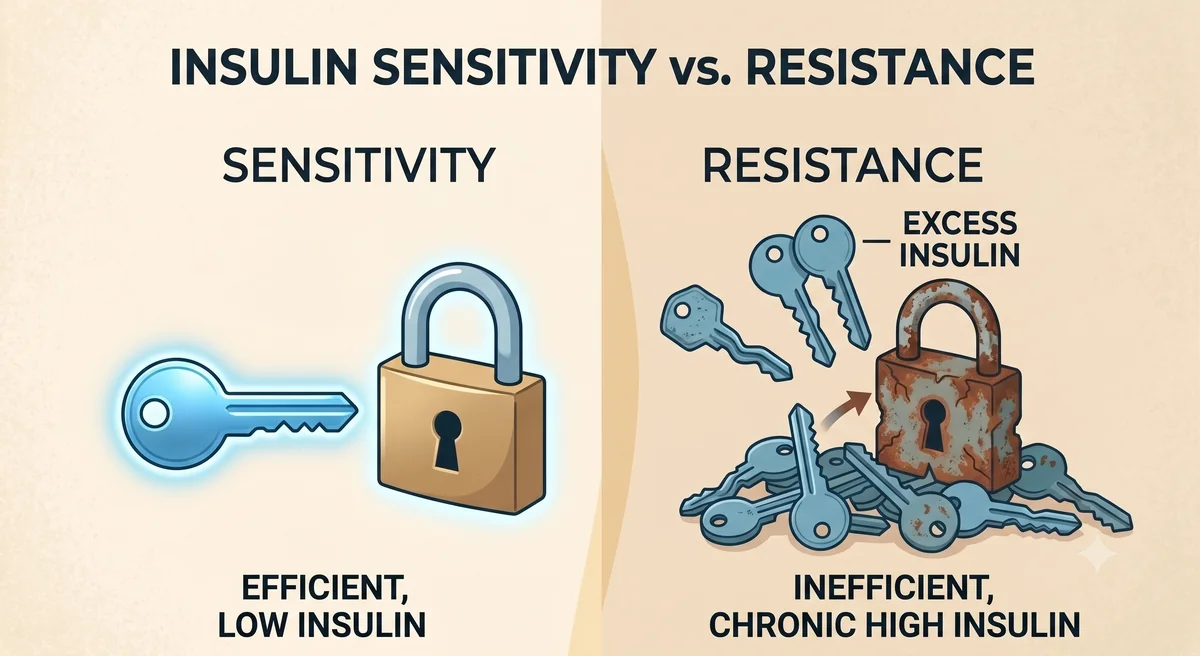
Insulin resistance is the opposite: cells stop responding well to insulin's signal, so the pancreas has to produce more and more of it to get the same effect. It usually develops over years and can be the first step toward type 2 diabetes. Risk factors include excess body weight, physical inactivity, age and family history, among others.
The good news is that regular aerobic exercise measurably improves insulin sensitivity. This effect can be sustained for 12 to 15 hours after a single bout of exercise and even longer with consistent regular training. This means that simply showing up to train consistently, independent of any dietary intervention, meaningfully improves the body's ability to use insulin efficiently. Exercise and nutrition together do more than either on its own.
How to work with your insulin: practical strategies for fitness enthusiasts
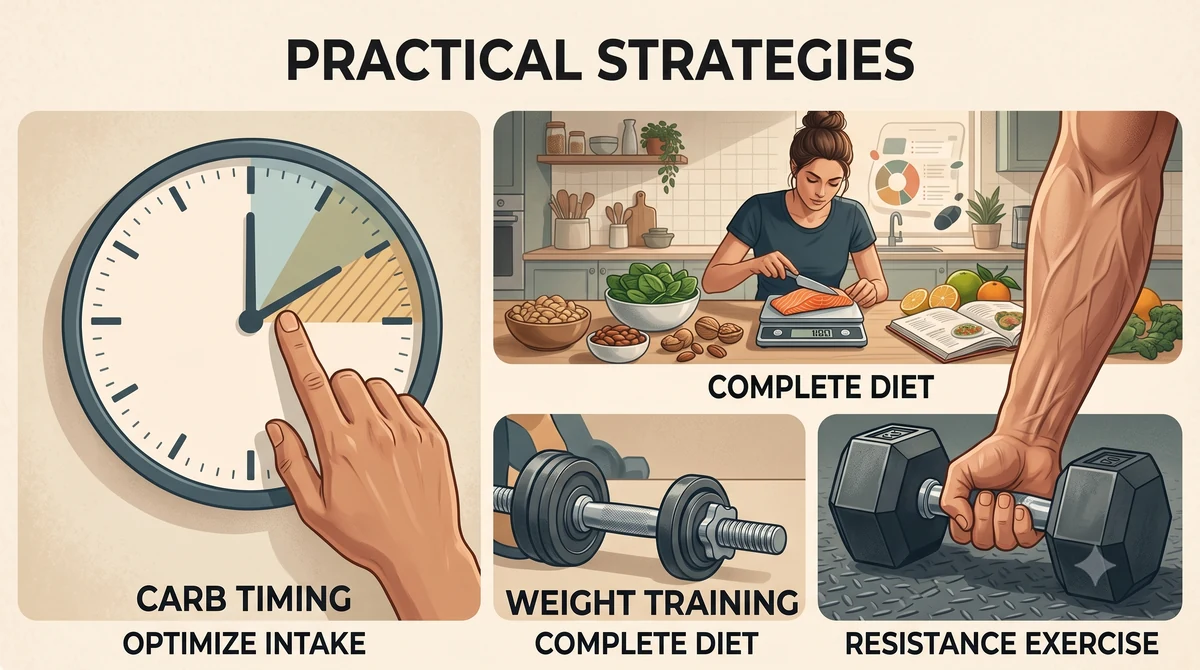
Armed with this knowledge, you can make deliberate choices that put insulin to work for you rather than against you. Let's be clear about the order. For most people, the biggest levers are total calories, enough protein and consistent training. Get those right first. Carbohydrate timing comes after that. Putting more of your carbs in the meals around training can help if you train hard, train twice a day, or have little time to recover between sessions: it supports glycogen resynthesis and recovery when you need them most. For everyone else, it is a detail, not the foundation.
You will also see chromium sold as an insulin helper. Chromium is found in food, but supplements have not been shown reliably to improve insulin sensitivity or body composition. Save your money.
Beyond performance and muscle, there is an appetite regulation benefit to well-managed insulin sensitivity. Insulin acts on the hypothalamus to suppress hunger signals, specifically by inhibiting the orexigenic NPY/AgRP neurons that drive hunger. This means individuals with good insulin sensitivity are better equipped to regulate appetite naturally, which makes long-term body composition management significantly easier. Finally, protect your insulin sensitivity: train regularly, keep body fat in a healthy range, and don't make a habit of eating far more than you need, especially from highly processed food. That makes all of this harder.
Key takeaways
- Insulin is a peptide hormone secreted by the β-cells of the pancreas via exocytosis in response to rising blood glucose; carbohydrates trigger the greatest insulin release of all macronutrients, and insulin has a short half-life of only 4 to 6 minutes.
- It manages blood glucose by moving GLUT4 transporters to the cell surface in muscle and adipose tissue, while inhibiting gluconeogenesis and promoting glycogen synthesis in the liver and muscle.
- As an anabolic hormone, insulin promotes glycogen, lipid and protein synthesis while inhibiting the catabolism of all three; it also activates mTOR, a critical regulator of muscle hypertrophy.
- Its primary contribution to muscle building is anticatabolic, reducing muscle protein breakdown, which can rise up to 50% at three hours post-exercise; this effect plateaus at levels a typical mixed meal one to two hours around training already achieves.
- High insulin sensitivity means using insulin efficiently in small amounts, supporting stable energy and appetite control; resistance usually develops over years, with risk factors including excess body weight, inactivity, age and family history, and can precede type 2 diabetes.
- Regular aerobic exercise improves insulin sensitivity for 12–15 hours after a single session. Calories, protein and consistent training come first; carb timing around workouts helps mainly if you train hard or often.
Sources
- Advanced Nutrition and Human Metabolism (8th Ed.), Ch. 3, 7, 8, 12 (insulin regulation, GLUT4 translocation, hormonal regulation, chromium).
- Clinical Sports Nutrition (4th Ed.), Ch. 19 (insulin sensitivity and exercise).
- Science and Development of Muscle Hypertrophy (insulin's anticatabolic role, mTOR activation, protein translation).
- Dušan Petrović, Smart Way to Lose Fat (insulin as the most anabolic hormone; carbohydrate dosing for insulin sensitivity).
- Abdulla, H. et al. Role of insulin in the regulation of human skeletal muscle protein synthesis and breakdown: a systematic review and meta-analysis. Diabetologia, 2016.
- Kerksick, C. M. et al. International Society of Sports Nutrition position stand: nutrient timing. JISSN, 2017.
- NIDDK. Insulin Resistance & Prediabetes (risk factors).
- NIH Office of Dietary Supplements. Chromium: Fact Sheet for Health Professionals.
Want this applied to your plan?
Calories, protein, carb timing when it actually matters: this is exactly the kind of thing I build into every client's nutrition. No guesswork, adjusted every week.
This article is general information, not medical advice. If you have a health condition, are pregnant, or take medication, talk to your doctor before changing how you train or eat. See the Health Disclaimer.